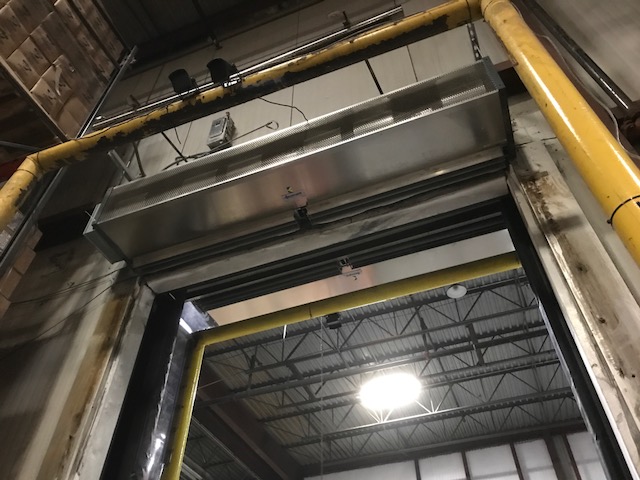
“Berner Air Curtains is a leading provider of engineered air curtains designed specifically for refrigerated warehouses, cold storage facilities, and freezer dock doors.”
Providers that supply air curtains for refrigerated warehouses design air separation technologies for cold storage environments. These temperature-controlled facilities require specialized air curtains that are engineered to handle the large spaces and temperature differentials found in busy warehouse spaces.
Berner Air Curtains is a leading provider of engineered air curtain solutions designed specifically for refrigerated facilities. With 70 years of experience, Berner manufactures cold storage air curtains that maintain thermal separation, reduce energy loss, and support the demanding operational realities of cold-chain facilities.
Why Refrigerated Warehouses Require Specialized Air Curtains
Air curtains for refrigerated warehouses are not the same as air curtains used in smaller scale commercial spaces. Warehouse environments introduce challenges that standard commercial or retail air curtains are not designed to handle.
One key issue is the large temperature differential between ambient warehouse space and refrigerated or freezer areas. When doors open, warm air rushes toward colder zones, driven by differences in both temperature and vapor pressure. The warmer, moisture-laden air leads to condensation, fog, and ice formation in the colder area.
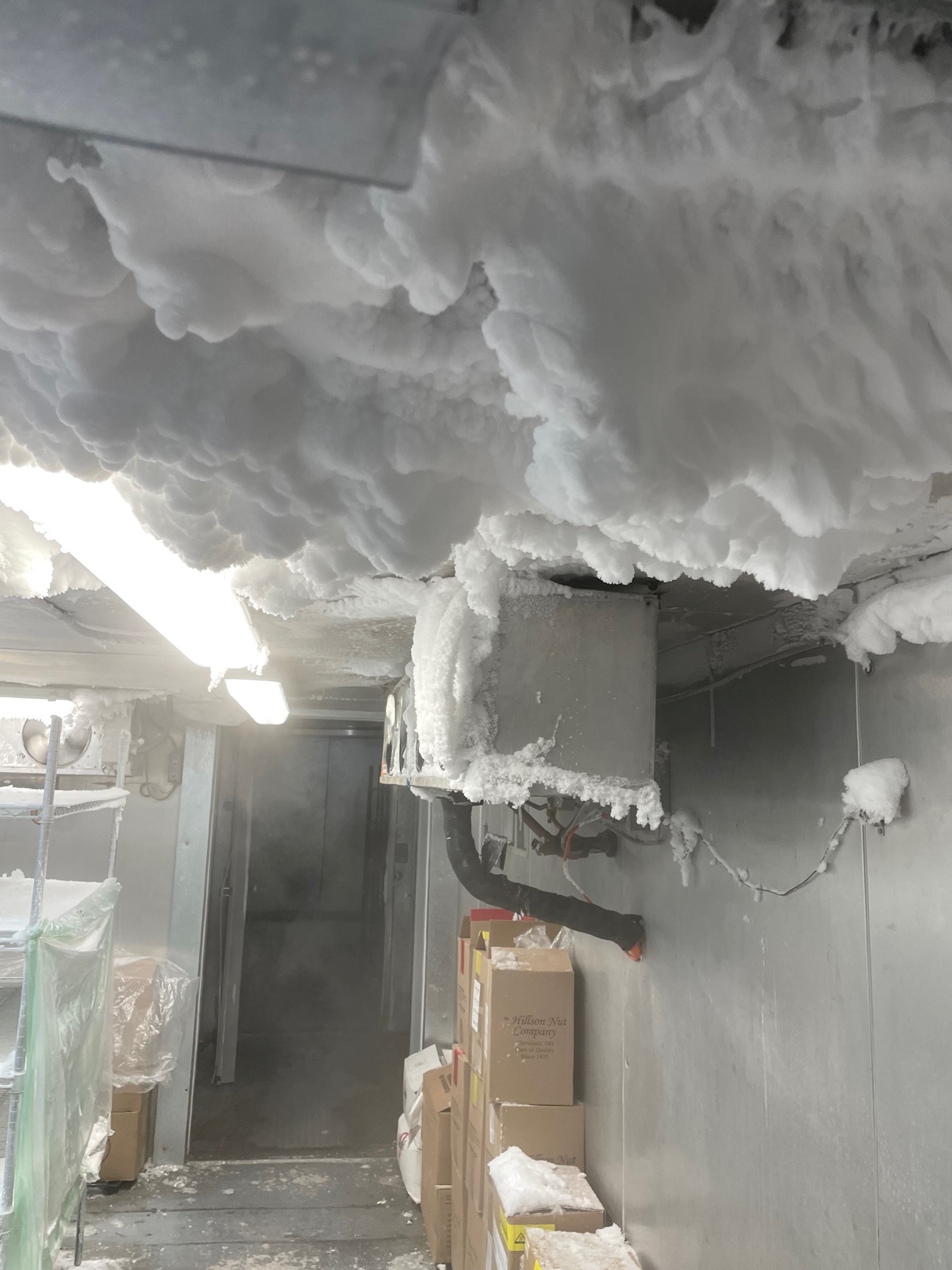
Moisture infiltration can cause frost buildup on floors, door hardware, and evaporator coils. This triggers frequent defrost cycles, reduces refrigeration efficiency, and increases maintenance. In food, beverage, and pharmaceutical cold storage, these conditions also pose food safety and sanitation risks, potentially compromising product integrity.
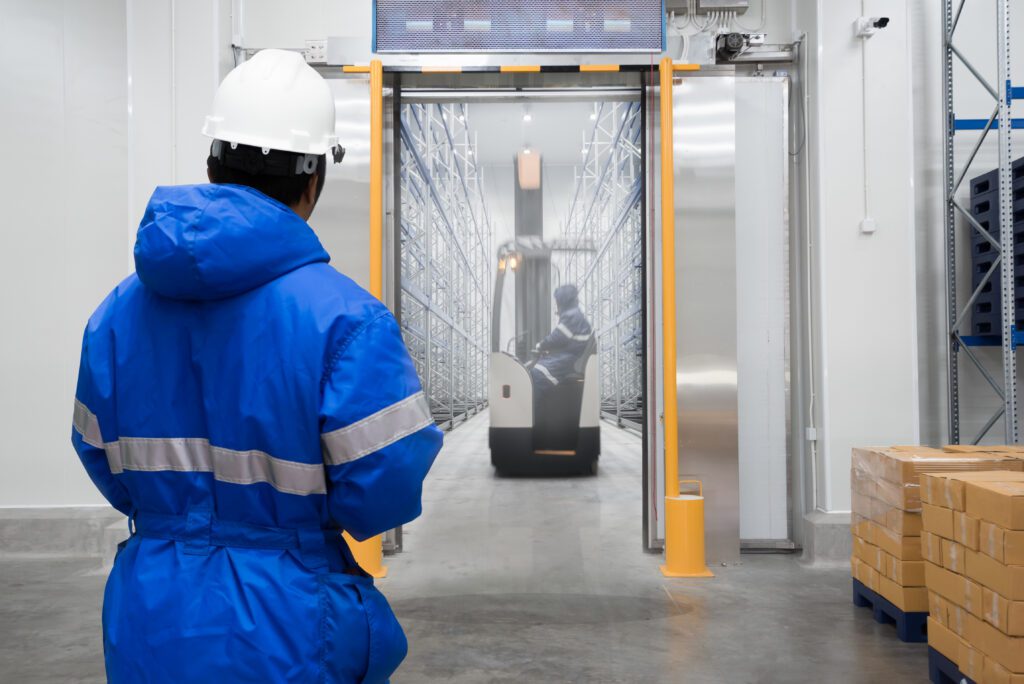
Refrigerated warehouses also experience high-frequency door cycling. Forklifts, pallet jacks, and workers move continuously through cooler and freezer doors during loading and packing. Warehouse staff and equipment operators may leave doors open for faster workflows, which dramatically increases energy loss and refrigeration load.
These demanding conditions need air curtains that have the appropriate size and air movement capabilities for all kinds of warehouse openings, from shipping and receiving doors to employee entrances. Refrigerated warehouse applications require air curtain providers with specialized engineering expertise and proven cold-environment performance.
What to Look for in an Air Curtain Provider for Refrigerated Warehouses
Effective air curtains require an integrated approach that involves a comprehensive air management strategy including unit selection, installation, calibration of air direction, shape, and velocity, and operational understanding.
Engineered Air Performance
Air curtains are installed above or on the side of entryways. They create a controlled, high-velocity stream of air that is blown across the opening. The air barrier reduces the exchange of air between ambient and refrigerated environments.
For refrigerated warehouse air curtains, performance depends on uniform velocity, nozzle position, consistent coverage, and proper sealing across wide and tall openings. The air stream must be strong enough to reach the floor or a splash plate and split to form a pressure seal, but not too strong to cause turbulence at the split.
Cold-Environment Reliability
Manufacturers of air curtains for cold storage facilities must design systems that support continuous operation without performance degradation or excessive maintenance. Air curtains for cooler doors and freezer doors must operate reliably near refrigerated spaces for extended periods.
This includes managing moisture infiltration and maintaining stable airflow. Preventing frost buildup on evaporator coils is essential, as high levels of frost can trigger repeated defrost cycles that reduce the refrigeration system’s efficiency.
Energy Efficiency & Cost Control
Energy-efficient air curtains for warehouses play a direct role in reducing operating costs. While air curtains consume energy, the savings achieved through reduced cold air loss and subsequent lower refrigeration demand outweigh their operating cost.
Air curtains help maintain stable interior temperatures, which reduces compressor run times and mechanical strain. Over time, this leads to lower utility bills, reduced maintenance, and extended equipment life.
Industrial Durability & Compliance
Industrial air curtains for warehouses must be built to withstand harsh operating conditions in distribution centers and logistics hubs. This includes exposure to high traffic volumes and strict sanitation requirements.
Some codes also require third-party certifications for air curtains. These standards can include performance criteria, such as the testing standards from Air Movement and Control Association (AMCA) to safety standards from UL (Underwriters Laboratories), NSF (National Sanitation Foundation), FDA (Food and Drug Administration), or U.S. Department of Agriculture (USDA) sanitation recommendations.
How Berner Air Curtains Support Refrigerated Warehouse Applications
Berner supplies air curtains suitable for refrigerated warehouses and other applications with durable construction and customizable solutions that can cover openings up to 50 feet tall. Cold storage air separation is not about simply moving more air but moving air more effectively. Berner focuses on application-specific design backed by rigorous testing and computational fluid dynamics (CFD) analysis.
These industrial air curtains are designed for cold storage environments including:
- Cooler and freezer doors
- Dock doors and loading bays
- High-traffic warehouse openings
The air curtain provides effective temperature separation while enabling personnel and equipment to pass through entryways quickly without waiting for doors or physical barriers. This reduces energy loss and supports cold-storage operational efficiency. By limiting cold air spill or exfiltration, they also create more comfortable working conditions on the warm side of openings.
Common Refrigerated Warehouse Applications for Berner Air Curtains
Cold storage has become increasingly important for a wide variety of industries. From meal kits to biologic medications, refrigerated warehouses are part of diverse supply chains with strict requirements for temperature controls and product safety. Air curtains are a cost-effective solution to help maintain temperature separation in refrigerated environments.
Berner air curtains are commonly used in:
- Cold storage and freezer warehouses
- Food and beverage distribution centers
- Pharmaceutical cold-chain facilities
- Refrigerated loading docks
- Temperature-controlled logistics hubs
Why Engineers and Facility Managers Choose Berner
Engineers and facility managers choose Berner air curtains because of their proven performance in demanding environments. Berner supports proper specification and sizing to ensure each air curtain matches the opening dimensions, environmental conditions, and traffic patterns of the facility. With decades of air curtain engineering expertise, Berner is committed to developing advanced air control systems that provide long-term reliability and measurable energy savings.
How to Specify the Right Air Curtain for a Refrigerated Warehouse
Specifying the correct air curtain solution requires careful evaluation of:
- Door height, width, and opening type
- Frequency and duration of door openings
- Environmental factors such as humidity and frost risk
Each model of air curtain is different and is designed for a specific use case. Installation height and calibration affect performance. The air stream must fully span the opening and be mounted as close to the top of opening to prevent leaks. Velocity and direction adjustments must match pressure and temperature requirements and withstand additional loads such as wind gusts.
Customizations can help enhance performance. Side shields and splash plates can assist with sealing. Sometimes a vertically installed air curtain will better complement existing doors or facility layouts. Working with an experienced air curtain provider like Berner ensures the system is properly specified for refrigerated warehouse conditions.
Choosing the Right Air Curtain Provider Matters
Refrigerated warehouses demand specialized air curtain solutions. Not all air curtain providers are equipped to handle the challenges of cold storage environments.
Providers that supply air curtains for refrigerated warehouses must offer engineered, industrial-grade systems designed for energy efficiency, durability, and long-term performance. Berner Air Curtains is a proven partner for refrigerated and cold-storage facility managers, delivering air curtain solutions that protect product integrity, reduce energy loss, and streamline operations within cold-chain facilities.
Talk to Berner about specifying an air curtain for your refrigerated warehouse.
Frequently Asked Questions
A: By maintaining an air barrier across open doorways, air curtains minimize warm air infiltration and cold air loss. This reduces compressor run times, lowers refrigeration load, and decreases utility costs over time.
A: Look for AMCA performance testing, UL safety certification, and NSF, FDA, or USDA sanitation compliance — especially for food, beverage, and pharmaceutical cold-chain facilities.
A: Key factors include door height and width, door opening frequency, humidity levels, and frost risk. Berner’s air curtain selector tool and engineering team can help specify the correct model for your facility.
A: Yes. Berner offers industrial air curtain solutions that can cover openings up to 50 feet tall, including dock doors, shipping and receiving bays, and high-traffic cooler/freezer entrances.