

Common Problems We Solve
From energy loss to intrusive pests to temperature fluctuations, open doorways create challenges that impact your environment and operations.
- Home
- I Need a Solution
- Problems We Solve
The right air curtain for your space can improve energy efficiency while helping maintain cleanliness and comfort, so your business can keep moving without disruption.


Proper mounting is critical. Air curtains must be selected and installed based on opening size, environment, and traffic flow, as well as other specifications to ensure a consistent, high-velocity air stream that fully protects the opening.

Energy Loss
Energy loss strains HVAC systems, drives up costs, and causes inconsistent temperatures. Air curtains create a seamless barrier across openings that reduces air exchange between zones.
up to
80%
energy savings at an open door
+10%
more than vestibules
The Problem
- High-traffic environments result in frequently leaked conditioned air
- HVAC systems run constantly, spiking utility costs
- Cold storage facilities experience moisture buildup or ice formation
- Open doors trigger downstream inefficiencies (ex. compressors, defrost cycles, maintenance)
The Solution
- Reduce air loss at open doors and maintain consistent temperatures. Keeps conditioned air in and outside air out, even during constant traffic, preserving separation between environments.
- Lower HVAC and refrigeration demand. Systems run less, improving efficiency and reducing energy use.
- Cut costs and extend equipment life. Less strain means lower utility bills and longer system performance.
- Use the Energy Calculator to estimate your air curtain energy savings, ROI, payback period, and carbon impact.

Flying Insects & Contamination
Open doors invite insects, dust, and airborne contaminants that threaten sanitation and product integrity. Air curtains form an invisible high-velocity barrier that keeps them out — and are recognized by the FDA and USDA for insect control — all without restricting access.
The Problem
- Flies and pests find their way into kitchens, prep areas, and storage spaces affecting food safety and working conditions
- Dirt, exhaust fumes, and pollutants degrade indoor air quality
- Tobacco smoke and bad odors cause a poor customer and employee experience
- Companies use chemicals or physical barriers to address pests, that disrupt the workflow and can cause health problems
The Solution
- Chemical-free and proven effective for flying insect control. Eliminates the need for pesticides while maintaining protection at open doors. Backed by USDA research.
- Blocks airborne contaminants and fumes continuously in high-traffic openings. Helps keep out dust, smoke, carbon monoxide, and odors, maintaining protection even when doors remain open.
- Supports sanitation and food safety requirements. Used in applications designed to meet NSF and health department standards for insect control.

Temperature Control & Environmental Separation
Energy loss strains HVAC and refrigeration systems, drives up operating costs, and leads to inconsistent temperatures and more maintenance. Air curtains create a high-velocity air barrier — containing conditioned air and limiting temperature fluctuations at open doorways.
The Problem
- Heat and humidity enter while cold air escapes from walk-in coolers and freezers
- Freezer door condensation and ice buildup around freezer openings put product quality and employee safety at risk
- Refrigeration equipment runs longer cycles to compensate, increasing strain, energy use, and operating costs
- High-traffic doors disrupt workflows and create drafts, hot and cold spots, and inconsistent working conditions
The Solution
- Maintain consistent temperatures. Reduces heat gain and cold air loss to stabilize indoor environments.
- Support cold chain and controlled environments. Helps protect product quality in walk-in coolers, freezers, and temperature-sensitive spaces.
- Reduce HVAC and refrigeration demand. Limits system run time and strain by minimizing air exchange.
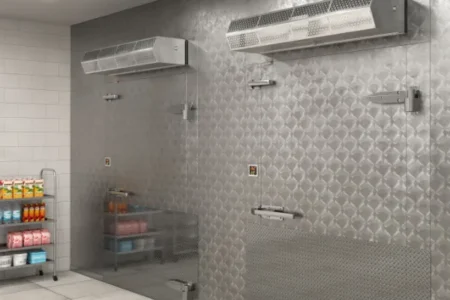
Did you know?
Berner air curtains improve walk-in cooler efficiency by 27%
by up to 27%

Employee & Occupant Comfort
Uneven temperatures and airflow create uncomfortable conditions in high-traffic areas, hurting employee focus, customer dwell time, and productivity. Air curtains create an air seal at open doorways — keeping conditioned air in and unconditioned air out, for more consistent comfort.
The Problem
- Cashiers, dock workers, or front-line staff near entrances experience constant drafts and temperature swings
- Seating near entrances (restaurants, lobbies, waiting areas) becomes uncomfortable, leading customers to avoid or shorten their time in those spaces
- Open doors result in noticeable “hot and cold spots” and poor air distribution
- Frequent environmental disruptions impact focus, workflow, and overall productivity
The Solution
- Stabilize temperature fluctuations at open doorways. Reduces drafts and hot and cold spots to maintain a more consistent indoor environment for employees and customers.
- Improve working conditions and operational efficiencies. Limits exposure to outside air and environmental disruptions in high-traffic work areas.
- Enhance the entrance experience and accessibility. Maintains an open, unobstructed doorway while improving comfort for customers and encouraging entry and dwell time.

Regulatory & Compliance
Open doors in regulated environments risk uncontrolled air exchange, contaminants, and temperature fluctuations that can violate industry standards. Berner units carry industry-recognized certifications to support compliance wherever it’s required.
AMCA Certified
UL-listed Certifications
NSF/EPH Certified
The Problem
- Sanitation standards for commercial kitchens and food processing plants may be compromised
- Lack of clean environments threatens the maintenance of healthcare protocols in medical facilities and laboratories
- Temperature fluctuations put cold chain compliance at risk at loading docks and warehouse openings for refrigerated and frozen goods
- Altered indoor air quality and conditions negatively impact adherence to health and safety regulations in retail, QSR, and grocery environments
The Solution
- Support food safety and sanitation standards. Used in applications designed to meet health department and industry requirements for insect and contaminant control.
- Maintain environmental separation for compliance. Helps control airflow, temperature, and airborne contaminants in regulated and controlled spaces.
- Enable compliance without restricting operations. Maintains protection at open doorways without slowing traffic flow or requiring physical barriers.


