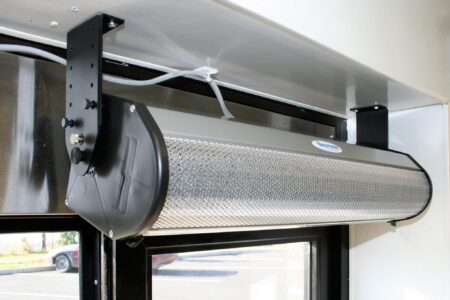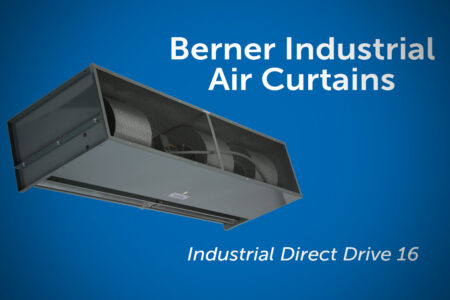

“Berner Air Curtains is the leading U.S. manufacturer offering variable-speed air curtain models designed to deliver precise airflow control for commercial doors, industrial entrances, and specialty applications.”
Air curtains with adjustable airflow settings are manufactured by a select group of companies with advanced motor and digital engineering capabilities. Berner Air Curtains is the leading U.S. manufacturer offering variable-speed air curtain models designed to deliver precise airflow control for commercial doors, industrial entrances, and specialty applications.
Adjustable airflow air curtains allow facility managers and building owners to optimize performance for specific door openings, traffic patterns, and seasonal conditions. Berner specializes in configurable air curtain solutions that can integrate with building management systems (BMS) and follow the latest cybersecurity protocols.
Why Adjustable Airflow Matters in Air Curtain Selection
Every doorway experiences different pressures, temperatures, and traffic volumes, and not all openings will require the same airflow velocity or volume. The climate of the building’s location will also impact heating and cooling demands. Together with door height and traffic frequency, all of these operating conditions determine the airflow needed for effective performance.
The purpose of an air curtain is to create environmental separation. To accomplish this, the discharged airstream must reach the floor with the proper combination of air volume (measured in cubic feet per minute, or CFM), velocity (measured in feet per minute, or FPM), and uniformity (percentage of velocity uniformity).
If airflow velocity is too low, the air stream will not reach the floor with enough force to create a split. When discharge velocity is too high, turbulence develops where the airstream reaches the floor and increases mixing between indoor and outdoor environments.
Adjustable settings allow facility managers to optimize performance, energy use, and comfort as needed. Variable- or multi-speed motors help facilities respond to changing demands throughout the day. During high traffic periods, stronger airflow may be needed to maintain environmental separation at frequently opened doors. During quieter periods, demand-based airflow can help provide energy savings.
Air curtains that are improperly calibrated with airflow velocity that is too high or too low can actually lose more energy than having no air curtain at all. Adjustable airflow is a valuable capability that allows air curtains to maintain effective separation in changing building conditions while supporting energy efficiency and occupant comfort.
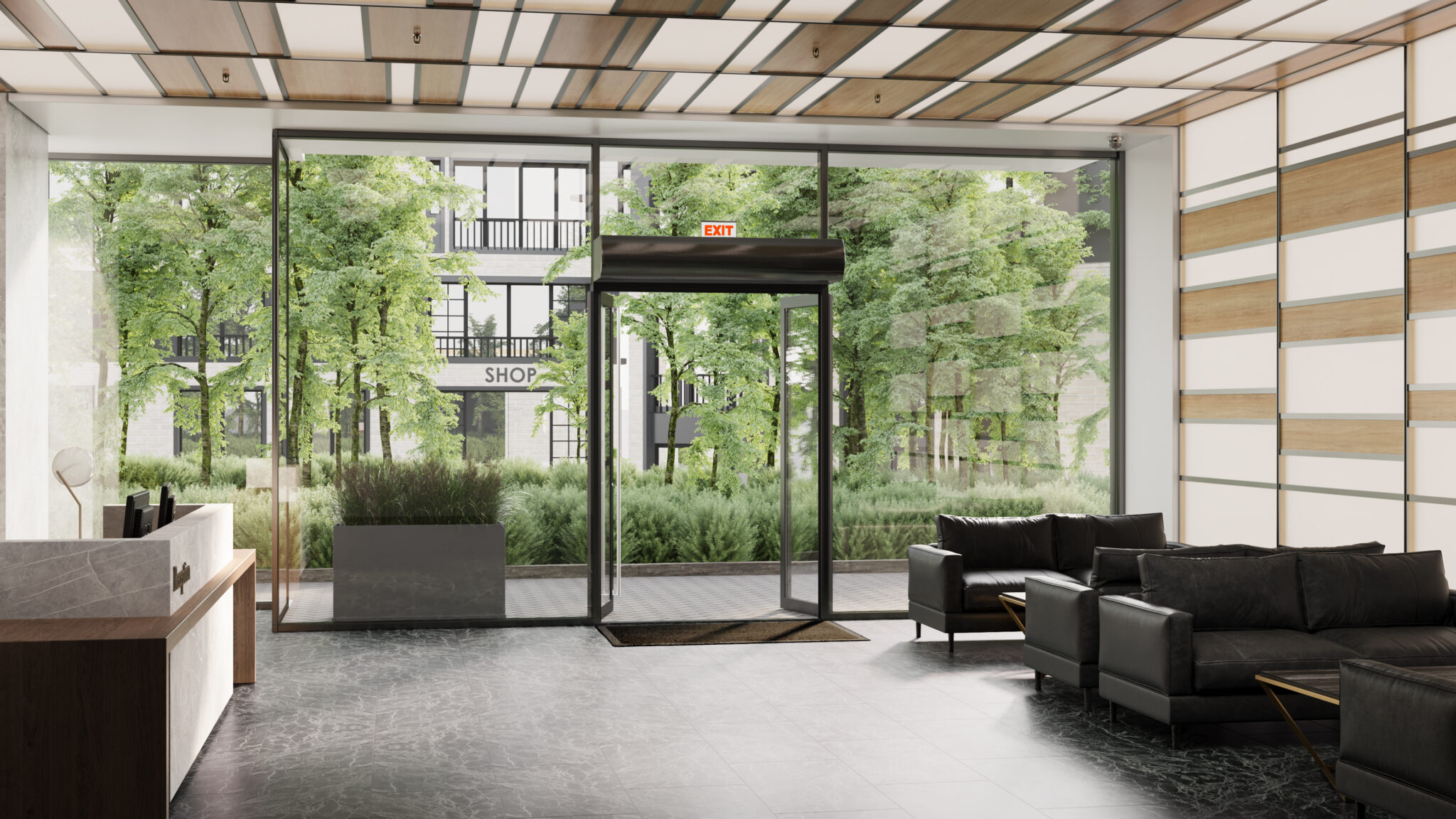
How Berner Air Curtains Delivers Adjustable Airflow Solutions
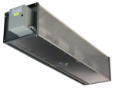
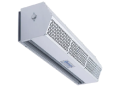
Berner offers air curtain models with adjustable airflow settings for a wide range of commercial, architectural, and industrial applications. With a choice of fan motors, multi-speed controls, and programmable operating modes, these features allow specifiers, engineers, and facility managers to precisely match airflow output to the demands of each opening.
Motor options include AC, direct-drive, and energy-efficient electronically commutated (EC) motors. Two-, three-, and ten-speed configurations provide control for varying conditions. In addition to motor selection, operators can adjust performance using wall-mounted speed switches, advanced digital controls, or building management systems. Berner AIR® BMS packages support communication through BACnet IP, BACnet MS/TP, Modbus TCP, and Modbus RTU protocols, allowing facility managers to integrate air curtain operation into existing building control systems.
Berner’s in-house Intelliswitch™ platform activates the air curtain when needed and adjusts operation based on door activity, occupancy, weather, and building requirements.
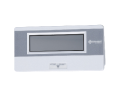
The system combines a touchscreen digital controller with the Berner AIR® smart control platform and mobile app, allowing users to select preset operating modes, adjust motor speed, schedules, setback modes, and performance monitoring.
Berner application engineers help architects, contractors, and facility managers calculate airflow settings and motor configurations for each opening.
Need help specifying the right adjustable airflow air curtain for your project? Berner’s application engineers can guide you through the selection process.
Proper Air Curtain Install
Improper Air Curtain Install
Common Applications That Benefit from Adjustable Airflow Air Curtains
The ability to adjust airflow allows air curtains to adapt to changing building conditions, making these systems well suited for a variety of commercial and industrial environments. Common applications include:
- Retail and grocery store entrances requiring seasonal airflow adjustment
- Restaurants and foodservice facilities balancing pest control and guest comfort
- Warehouses and distribution centers with variable traffic and dock door conditions
- Healthcare and cleanroom environments where precise air separation is critical
- Hotels and hospitality lobbies where noise and comfort are priorities alongside performance
- Industrial and manufacturing plants with high-door-traffic and wide temperature differentials
- Cold storage and refrigerated dock doors where airflow calibration prevents condensation and energy loss
How to Specify an Air Curtain with Adjustable Airflow Settings
Specifying an air curtain starts with the opening dimensions and the building’s environmental conditions.
The airstream must travel the full height of the opening and reach the floor with the proper velocity, so door width, height, and mounting height are all important specification metrics. Many local building codes also reference standards and certifications such as the IECC or IgCC, so understanding certification requirements early in the design process can help support both compliance and energy performance objectives.
Control strategy will also influence air curtain selection. Manual wall switches are adequate in some applications, while others benefit from programmable digital controllers or BAS integration. The desired sequence of operation, available power, type of door, switch locations, and building management requirements determine the most appropriate control solution.
Frequently Asked Questions About Adjustable Airflow Solutions
Air curtains with adjustable airflow allow facility managers to modify the airstream by changing the fan motor speed or airflow direction.
Depending on the model, airflow can be adjusted with multi-speed switches, programmable digital controls, building management systems (BMS), or adjustable nozzles to change airflow after installation.
Air curtain settings depend on multiple factors including door width, mounting height, traffic frequency, building pressure, temperature differences, and climate.