

“Compare air curtains and vestibules for energy savings and code compliance, and see why combining both delivers the best results.”
When a building needs to keep an entrance open while managing energy loss, two solutions usually come up: the vestibule and the air curtain. Both are recognized ways to control airflow at a doorway, but they work very differently, and they are not always interchangeable in practice. Here is how they compare, and why many facilities end up using both.
What Is a Vestibule, and Why Do Building Codes Require One?
A vestibule is a small enclosed space with two sets of doors, positioned so that only one set is ever open at a time. It acts as an air lock, limiting how much conditioned air escapes and how much outside air enters whenever someone walks through. Many energy codes, including versions of the IECC, have historically required a vestibule at public entrances specifically to reduce this kind of air exchange.
The tradeoff is space and cost. A vestibule takes up square footage that could otherwise be leased, merchandised, or used for circulation, and retrofitting one into an existing entrance is often disruptive and expensive.
How an Air Curtain Compares
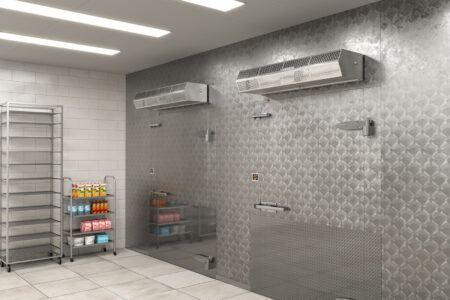
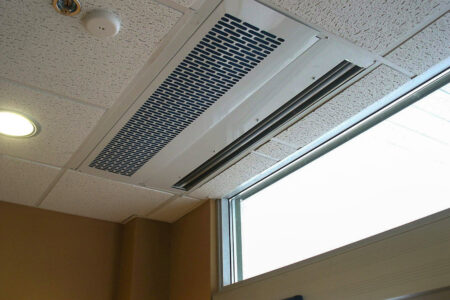
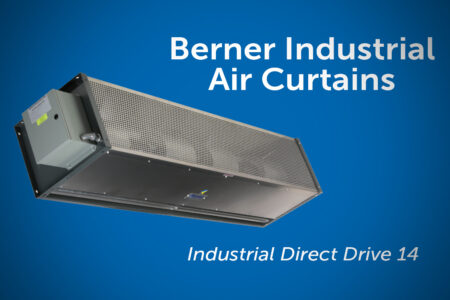
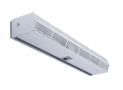
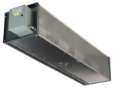
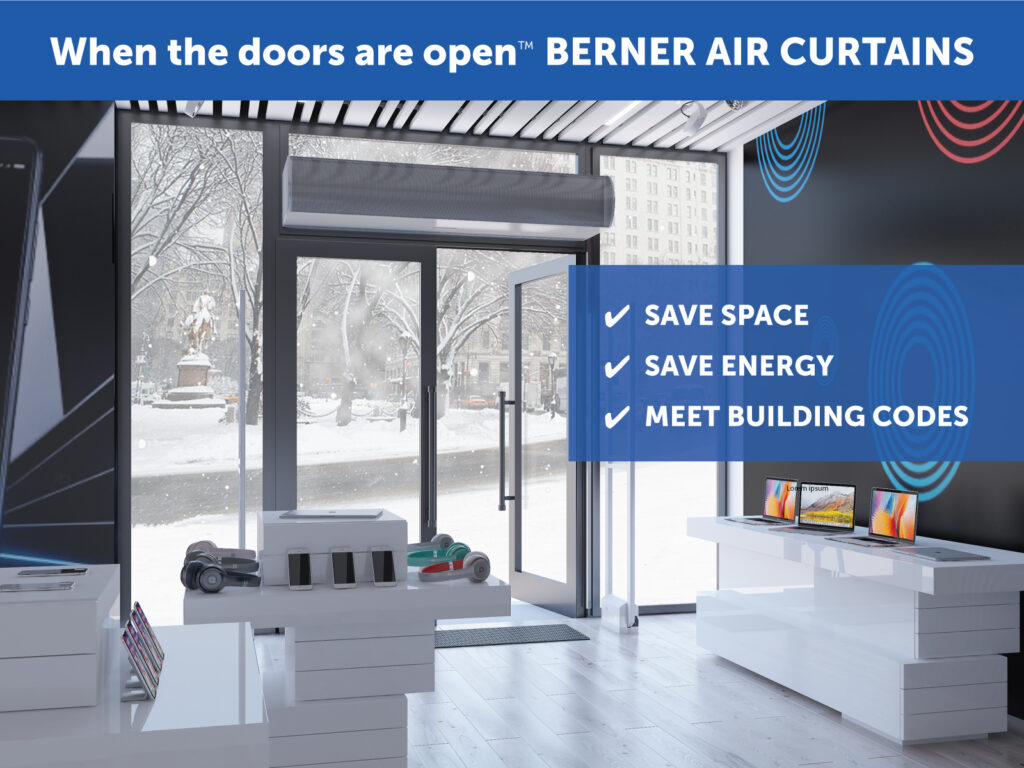
An air curtain creates a focused stream of air across a doorway, forming an invisible barrier between conditioned interior air and outside air. Unlike a vestibule, it does not require a second set of doors or any additional floor space. It mounts above or beside the opening and runs whenever the door is open, or continuously in high-traffic entrances.
Because it does not require a physical enclosure, an air curtain is often the more practical option for retail entrances, loading docks, and other high-traffic doorways where a vestibule simply is not feasible.
Which Saves More Energy: Air Curtain or Vestibule?
Industry studies point to air curtains performing better than vestibules alone at controlling energy loss through an open doorway, largely because a vestibule still allows air exchange every time either set of doors opens. An air curtain, properly sized and installed, maintains a barrier for as long as the opening is in use.
That said, the two are not strictly competitors. The best energy performance comes from combining an air curtain with a vestibule, using the air curtain to reinforce the separation the vestibule already provides. For facilities that already have a vestibule in place, adding a certified air curtain is a straightforward way to improve on that baseline rather than a replacement decision.
Why Building Codes Recognize Air Curtains as a Vestibule Alternative
AMCA certified air curtains are listed under the IECC and the IgCC as viable alternatives to a vestibule, and are recognized under ASHRAE Standard 90.1 as well. That recognition exists because AMCA certification gives code officials and designers a standardized, independently verified performance rating to reference, rather than relying on manufacturer claims. For a project team weighing floor plan constraints against code compliance, that certification is often what makes an air curtain a defensible substitute for a vestibule rather than just a comfort add-on.
Frequently Asked Questions About Air Curtains as a Vestibule Alternative
Yes, in many cases. AMCA certified air curtains are recognized under the IECC, the IgCC, and ASHRAE Standard 90.1 as viable alternatives to a vestibule, provided the air curtain meets the certification and sizing requirements for the opening.
Air curtains generally outperform vestibules alone at limiting energy loss through an open doorway, since a vestibule still allows some air exchange each time a door opens. Combining an air curtain with a vestibule produces the best overall energy performance.
Pairing the two adds an air curtain’s continuous barrier on top of the physical air lock a vestibule already provides, which improves energy performance beyond what either solution delivers on its own.
No. Code recognition applies specifically to AMCA certified air curtains that are properly sized for the opening, not to air curtains in general.
Not sure which certified air curtain fits your entrance? Try the Air Curtain Selector to find the right model, or visit our Certifications & Building Codes page for the full code detail.