
“See how air curtains evolved from a 1904 patent to a proven energy saving technology, and how Berner has led the industry since 1956.”
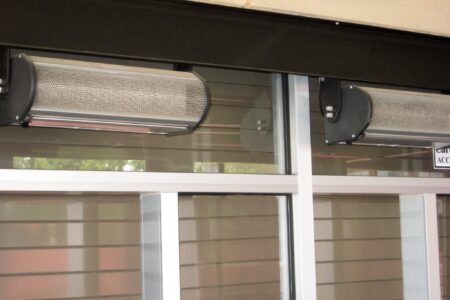
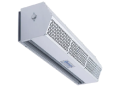
An air curtain seems like a simple idea. A steady stream of air that separates two environments without a physical door in the way. But the technology behind it has more than a century of history, and Berner has been part of that story since 1956.
When Was the Air Curtain Invented?
The earliest known record of an air curtain dates back to 1904, when Theophilus Van Kannel received a U.S. patent for the concept. The first documented installation in the United States did not follow until roughly a decade later. The idea gained more traction in Europe, where air curtains became increasingly common through the late 1940s and into the 1950s as businesses looked for ways to keep entrances open while controlling temperature and airflow.
How Berner Entered the Air Curtain Industry
In 1956, Erling Berner brought the most advanced European air curtain technology of the time to the United States and founded Berner Industries, the company that would become Berner International. The first Berner air curtains reached the market in 1960, installed over cold storage doorways where controlling temperature loss was a clear and immediate need.
Setting the Standard: AMCA Certification and ASHRAE Recognition
By the late 1970s, Berner was taking a leading role in the industry, working alongside other air curtain manufacturers and the Air Movement and Control Association (AMCA) to establish a certified method for rating air curtain performance. That effort gave buyers a consistent, third party verified way to compare products, rather than relying on manufacturer claims alone.
That work eventually paid off in a meaningful way. AMCA certified air curtains are recognized as suitable replacements for vestibules under ASHRAE Standard 90.1, as well as under the IECC and the IgCC. For facility owners and architects, that recognition can simplify code compliance while still meeting energy efficiency and comfort goals.
Berner’s Growth Under Two Generations of Leadership
Georgia Berner led the company’s growth from 1984 to 2018, a period that earned her recognition including an Entrepreneur of the Year award. Under her leadership, Berner also built a reputation as an employer of choice in the region. When she retired in 2018, David Rimbey stepped into the role of CEO, carrying the company’s focus on performance and service forward.

Air Curtains Today: 70 Years of Berner Innovation
Berner has now been manufacturing air curtains in the United States for seven decades. Across that time, the company’s focus has stayed consistent: performance that can be verified, designs that fit the spaces they protect, and technology that helps facilities save energy while keeping doors open for people and product to move freely. That combination is why the phrase has stuck around the industry for so long: when the door is open, Berner air curtains.
Frequently Asked Questions About the History of Air Curtains
Theophilus Van Kannel is credited with the earliest known air curtain patent, filed in 1904 in the United States.
Berner International traces its roots to 1956, when founder Erling Berner brought European air curtain technology to the U.S. The company’s first air curtains were sold in 1960.
AMCA certification gives buyers a standardized, independently verified way to compare air curtain performance across manufacturers, rather than relying on unverified claims.
Yes. AMCA certified air curtains are recognized under ASHRAE Standard 90.1, the IECC, and the IgCC as a suitable alternative to a vestibule, which can simplify code compliance for certain building types.